EN
Ponytails and buns for grey hair: comfort without a strong pull
Choose a hair tie or clip, secure longer grey hair comfortably and plan for gentle removal without unnecessary pulling.

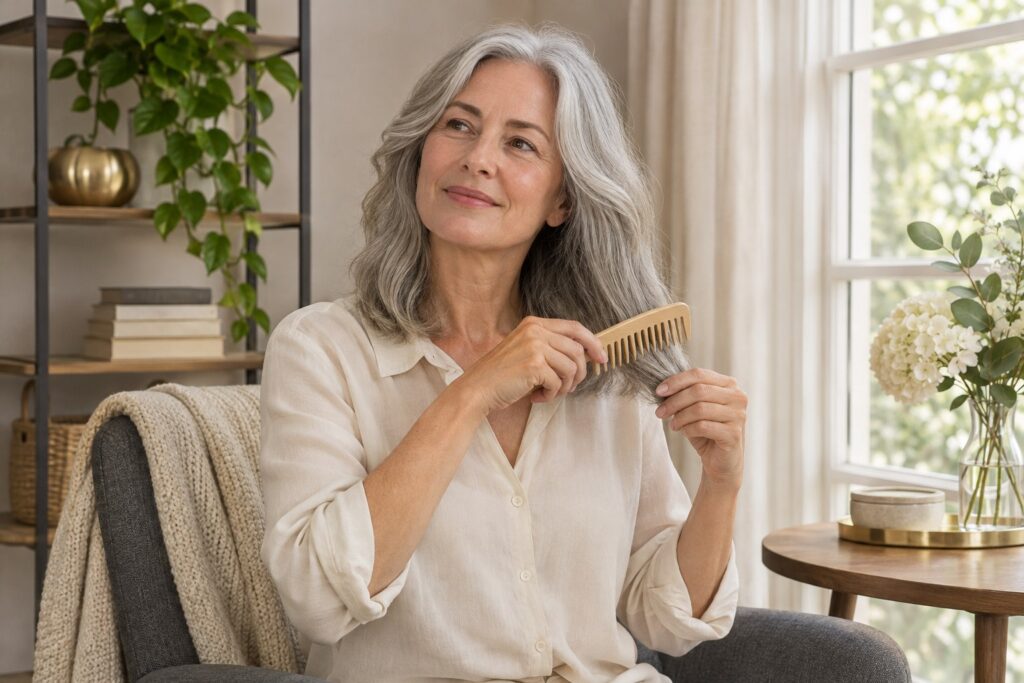
A ponytail or bun can keep longer grey hair out of the way while you work, cook or go for a walk. Looking neat need not mean pulling everything back so firmly that you feel the roots whenever you turn your head. When choosing a hair tie and a way to secure it, consider comfort, easy removal and what you actually need the hairstyle to do. Hair colour alone does not determine which accessory will suit you.
Check comfort before the finished shape
Once your hair is secured, try an ordinary movement: turn your head, lean towards your desk and rest against the back of your chair. Loosen the style if it pulls uncomfortably. You do not have to wait until evening to decide that the ponytail position or clip size is unsuitable. A looser style can still look considered, with a few strands left around the face.
The American Academy of Dermatology’s guidance on tight hairstyles explains that repeated strong pulling can contribute to hair loss. This is not a special property of grey hair. A perfectly sleek outline need not be the priority for every everyday hairstyle.
Match the accessory to the amount of hair
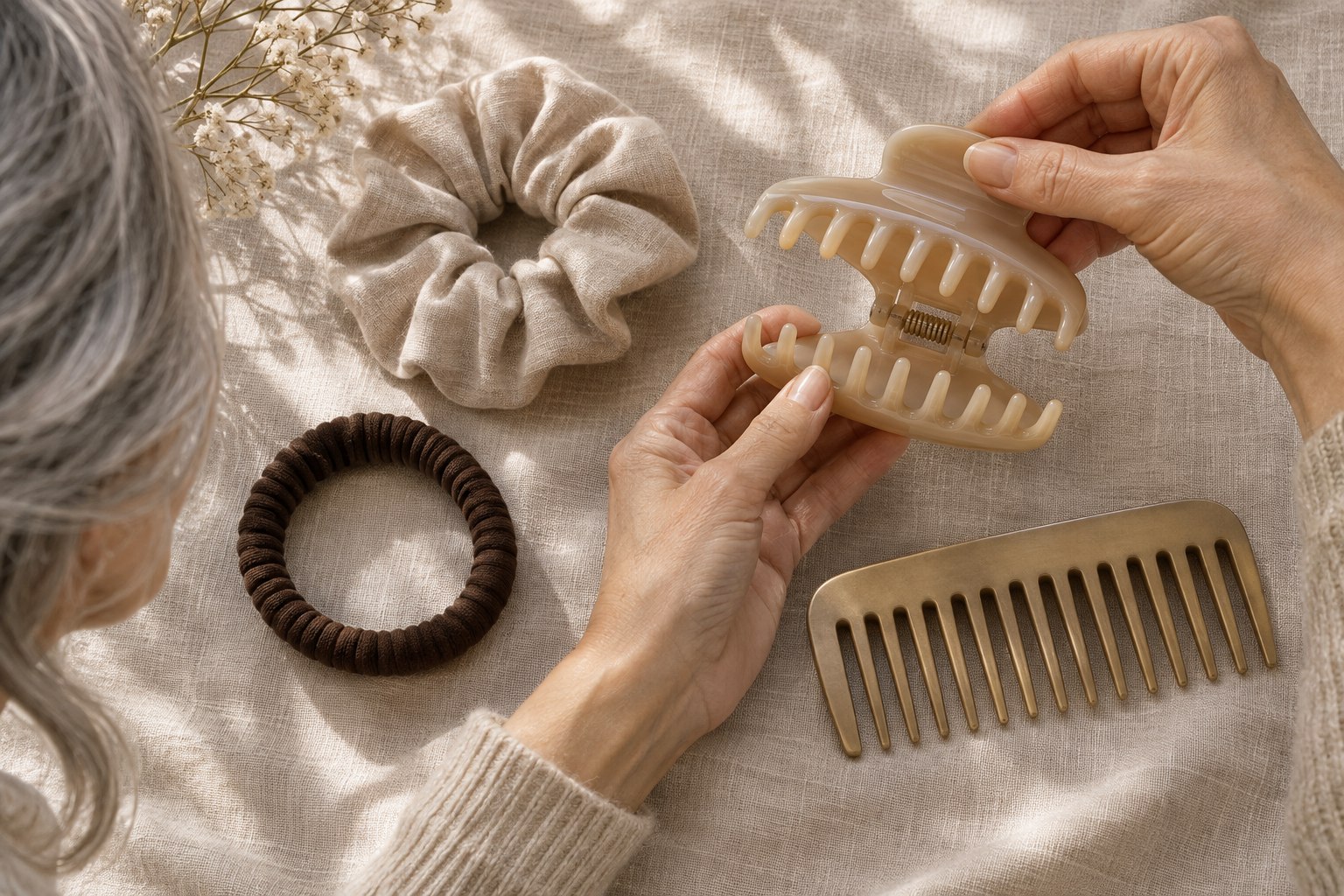
Look at the accessories you already own. Is the covering on the hair tie intact? Does a joint protrude, catch a strand or leave part of the elastic exposed? Check a clip’s teeth and closing area, too. Put aside anything with a broken or sharp edge. When shopping, checking its size and opening mechanism may be more useful than choosing only by colour.
AAD recommends covered bands designed for hair in its guide to gentler hair-care habits. A soft surface is not a reason to keep tightening, however. If a tie only holds after uncomfortable stretching, or a clip is too small for the gathered hair, try a different size or a simpler arrangement.
Plan for taking the style down
Before gathering your hair, keep the tie within reach and release any caught strands. If the lengths snag as you bring them together, stop at the specific area. Our guide to detangling longer grey hair separates working through a knot from creating the finished hairstyle. A ponytail does not necessarily deal with a tangle hidden beneath its tie.
When taking the style down, support the gathered hair and unwind the tie gradually. Avoid dragging it through the full length if it catches as it moves. Open a larger clip sufficiently before lifting it away. A snag is a reason to slow down and improve your view in the mirror, rather than to pull harder. Allow a moment for removal when changing clothes, too.
Adapt the position to your day
A low ponytail may work at your desk but get in the way when you rest your head. A high bun may be awkward under a hat or hood. Think about your glasses, headphones and clothing when trying the position. You do not need one hairstyle that stays exactly the same through every activity from morning to bedtime.
Before a video call, try moving the fastening and checking the result from the front and side. For household tasks, choose something you can loosen easily. After changing the arrangement, notice whether it actually feels more comfortable. Swapping one clip for another while keeping the same strong pull may leave the original annoyance unchanged. Keep an alternative nearby so changing it does not become a complicated task.
You do not always need to gather all your hair. Reading or putting on make-up may only require keeping the front sections clear, while a loose low ponytail may suit an activity better. Decide which strands need to stay away from your face and which can remain loose. For a half-up style, try a smaller section without extra tightening. If the clip slips, choose a different size or amount of hair rather than forcing it closer to the roots. Match the accessory to the task, not just a photograph on its packaging.
Follow Reparex instructions separately
If you use Reparex for Women, follow the current leaflet for your variant. Shake Reparex thoroughly before every use. The website describes a small amount on dry, undyed hair as directed, careful spreading, a wait of about three to four minutes and a hairdryer according to the instructions. Do not rinse immediately. Protect your hands, clothing and surrounding surfaces.
Reparex is intended for undyed hair and must not be combined with hair dyes. A hair tie or clip does not determine its dose or application time. Plan your styling so that you can follow the leaflet. This article does not establish a new interval for tying hair after application or confirm compatibility with another cosmetic product.
When another accessory is not enough
Loosen a painful hairstyle. Seek a dermatologist’s advice for persistent problems, visible thinning or a receding hairline. A photograph of a ponytail cannot establish the cause, and cosmetics cannot replace an examination. For ordinary styling choices, meanwhile, notice specific practical issues: which accessory catches during removal, which position gets in the way and which fastening you can operate comfortably.
Prepare two straightforward options for tomorrow morning instead of taking out a whole drawer of clips. Try them without strong tightening and keep the one that feels comfortable when you move. If you are considering a different length, tell your hairdresser how you usually wear your hair tied back. Demonstrating your everyday arrangement can explain your needs more clearly than naming a haircut alone.